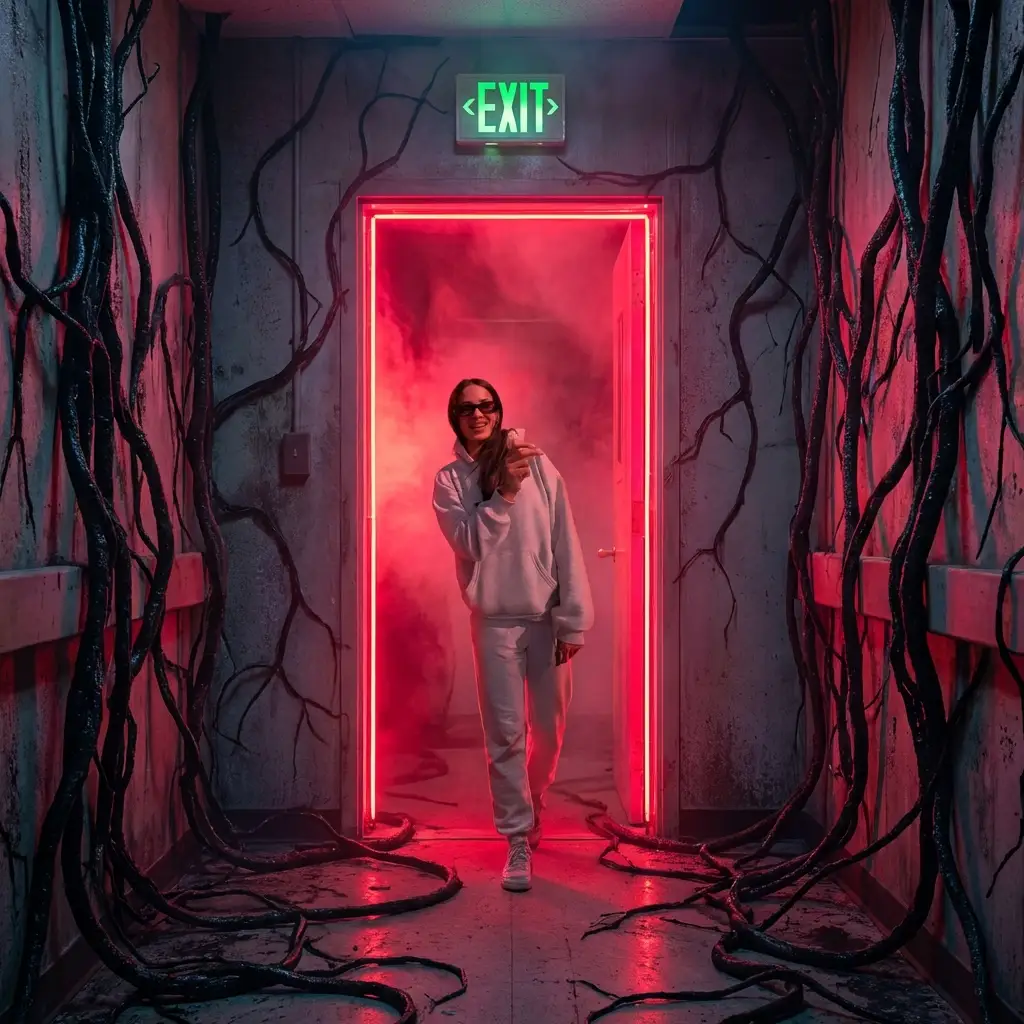
Render the subject walking confidently through a glowing neon-red doorway in an abandoned Hawkins Lab hallway of Stranger Things. Thick black organic vines (Mind Flayer vines) crawl across the walls and floor. The doorway emits intense crimson light. Flickering green EXIT sign. Moody sci-fi horror aesthetic, volumetric fog, ultra-detailed textures.
About this style
The Hawkins Lab Hallway style transports your subject into the eerie, corrupted corridors of the secret government facility from Netflix's Stranger Things, blending retro 1980s institutional architecture with supernatural horror elements from the Upside Down dimension. This aesthetic captures the show's signature visual language of cold fluorescent lighting contrasted with otherworldly crimson glows, decaying infrastructure overtaken by sentient organic matter, and an atmosphere of scientific experiments gone catastrophically wrong.
The style became iconic through the series' second and third seasons when the Mind Flayer's influence visibly infected the physical world, creating a perfect intersection of Cold War era paranoia and cosmic body horror.
This prompt style works exceptionally well when you want to place a subject in a narrative context that suggests they're either bravely confronting supernatural threats or have become part of something sinister themselves. The confident walking pose combined with the ominous environment creates compelling tension and storytelling potential, making it ideal for character portraits that need dramatic atmosphere or fan art that celebrates the Stranger Things universe.
Photographers and digital artists often use this aesthetic for cosplay photography, album covers in the synthwave or dark electronic genres, or promotional material that needs that specific 1980s supernatural thriller vibe.
For best results, ensure your subject description is detailed and that you emphasize the contrast between the warm red doorway glow and the cooler ambient lighting of the hallway itself. The volumetric fog is crucial for achieving that cinematic depth and atmosphere, so mention lighting rays or god rays if your model supports those concepts.
The organic vines should appear both alien and threatening, with texture descriptors like glistening, pulsating, or biomechanical helping to achieve that Mind Flayer aesthetic.