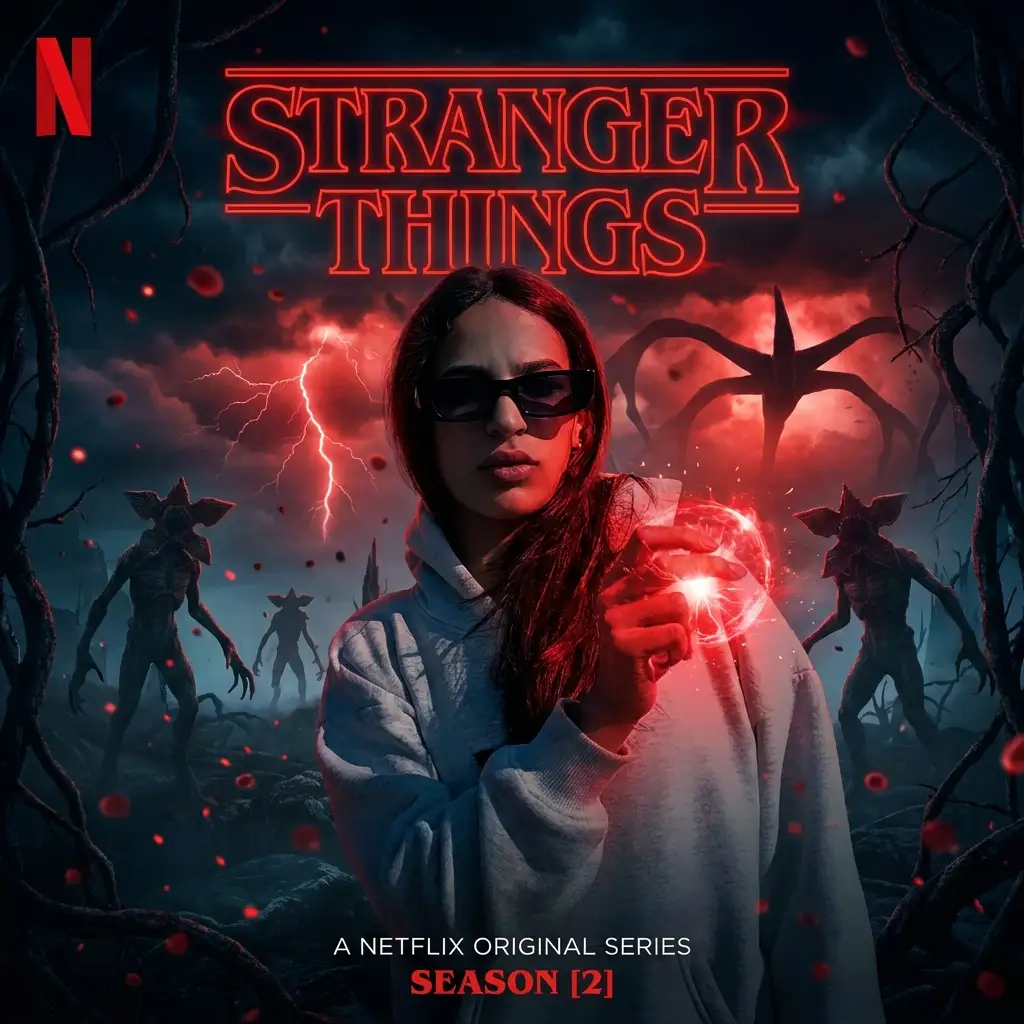
Person featured in official Netflix Stranger Things season poster design. Bold red title text. Character positioned in center. Dark atmospheric background with Upside Down elements. Floating particles. Netflix branding style. Cinematic movie poster composition. Professional graphic design.
About this style
The Netflix Character Poster style for Stranger Things recreates the iconic promotional aesthetic that has become synonymous with the hit series since its debut in 2016. This design approach captures the show's signature blend of 1980s nostalgia, supernatural horror, and coming-of-age drama through moody lighting, the distinctive red title treatment, and atmospheric elements from the show's alternate dimension known as the Upside Down.
The style became instantly recognizable through Netflix's marketing campaigns, featuring individual characters dramatically lit against dark, particle-filled backgrounds that suggest both mystery and danger.
This aesthetic is perfect for creating fan art, personalizing social media profiles with a Stranger Things twist, or developing promotional materials for 80s-themed events and parties. The composition typically places the subject front and center with cinematic lighting that emphasizes facial features while maintaining an air of suspense and intrigue.
Key visual elements include the show's characteristic red glow, floating spores or ash particles that reference the Upside Down dimension, and a color palette dominated by blacks, deep blues, and crimson accents that create that unmistakable Netflix horror-drama atmosphere.
For best results when generating this style, include specific details about lighting direction, the intensity of the red tones, and the density of atmospheric particles you want in the background. Mentioning the Upside Down explicitly helps AI models understand the supernatural elements that should permeate the scene.
Both Gemini Image Pro and OpenAI 4o handle this style effectively, with Gemini excelling at capturing the textural quality of the floating particles and atmospheric depth, while OpenAI 4o tends to produce sharper typography and more precise character positioning that closely mimics professional poster design.