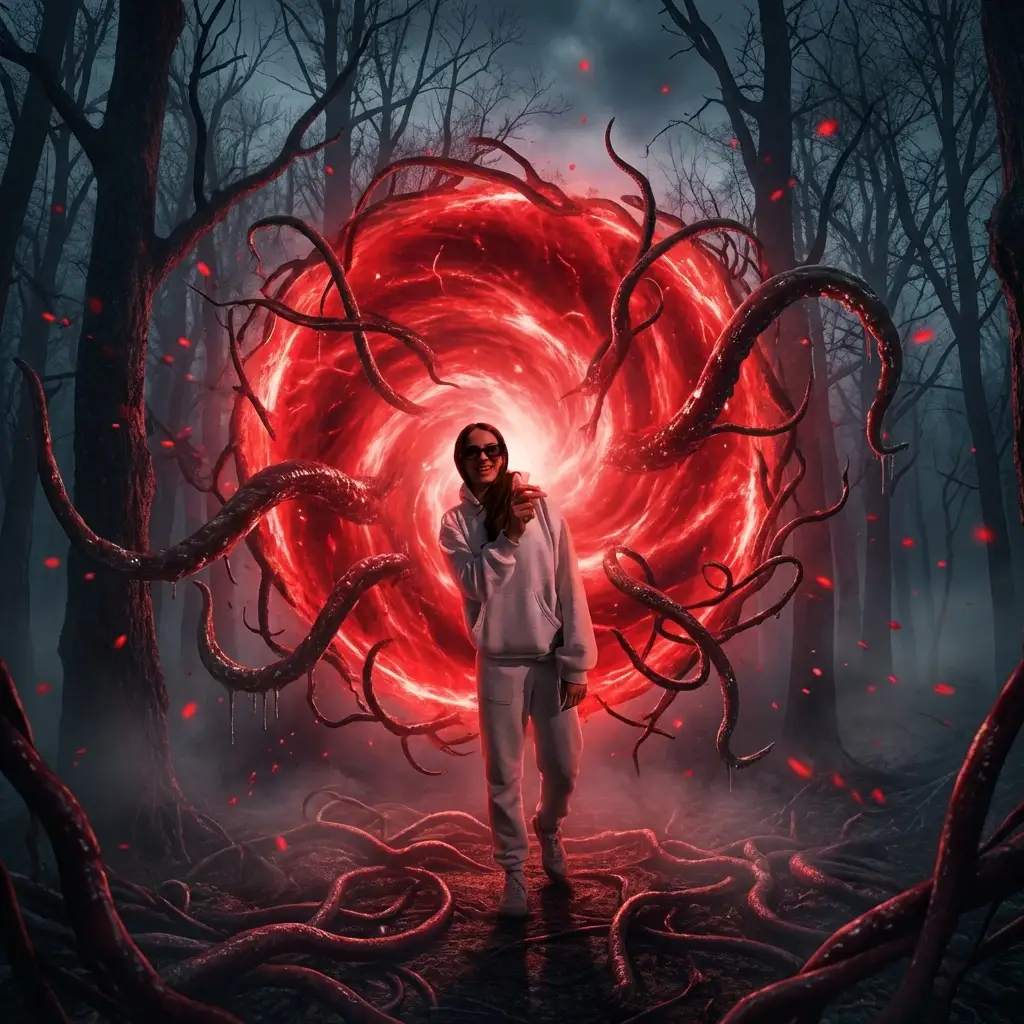
Person standing before massive glowing red portal to Stranger Things' Upside Down dimension. Tentacles and vines emerging from gateway. Dark forest setting. Ominous red lighting with particle effects. Eerie atmosphere. Fog and mist. Cinematic wide angle. Horror movie aesthetic.
About this style
The Upside Down Portal aesthetic captures one of the most iconic and terrifying visual elements from the Netflix series Stranger Things: the dimensional gateways that connect our world to the nightmarish parallel dimension known as the Upside Down. This style recreates those pivotal moments when characters encounter rifts in reality, complete with the signature crimson glow, otherworldly organic matter, and an overwhelming sense of dread that defines the show's horror elements.
The aesthetic draws heavily from 1980s sci-fi horror films like The Thing and Poltergeist, while incorporating modern cinematic techniques that make these portals feel both supernatural and disturbingly organic.
This prompt style works exceptionally well for fans creating Stranger Things inspired artwork, horror movie poster designs, or anyone looking to capture that specific blend of science fiction and cosmic horror that made the series so compelling. The combination of a lone human figure facing an incomprehensibly alien threat creates instant drama and scale, making it perfect for book covers, gaming artwork, or atmospheric concept pieces.
For best results, emphasize the contrast between the dark forest environment and the intense red portal lighting, and don't hesitate to specify details about the tentacles and vines to make them feel genuinely threatening rather than decorative.
Both Gemini Image Pro and OpenAI 4o handle this aesthetic remarkably well, as they excel at rendering dramatic lighting scenarios and atmospheric effects like fog and particle systems. Gemini Image Pro tends to produce slightly more painterly, artistic interpretations that can feel more like concept art, while OpenAI 4o often delivers sharper, more photorealistic results with particularly impressive particle and lighting effects.
Whichever model you choose, including terms like "cinematic," "wide angle," and "horror movie aesthetic" helps the AI understand the dramatic framing and mood you're aiming for in your final image.