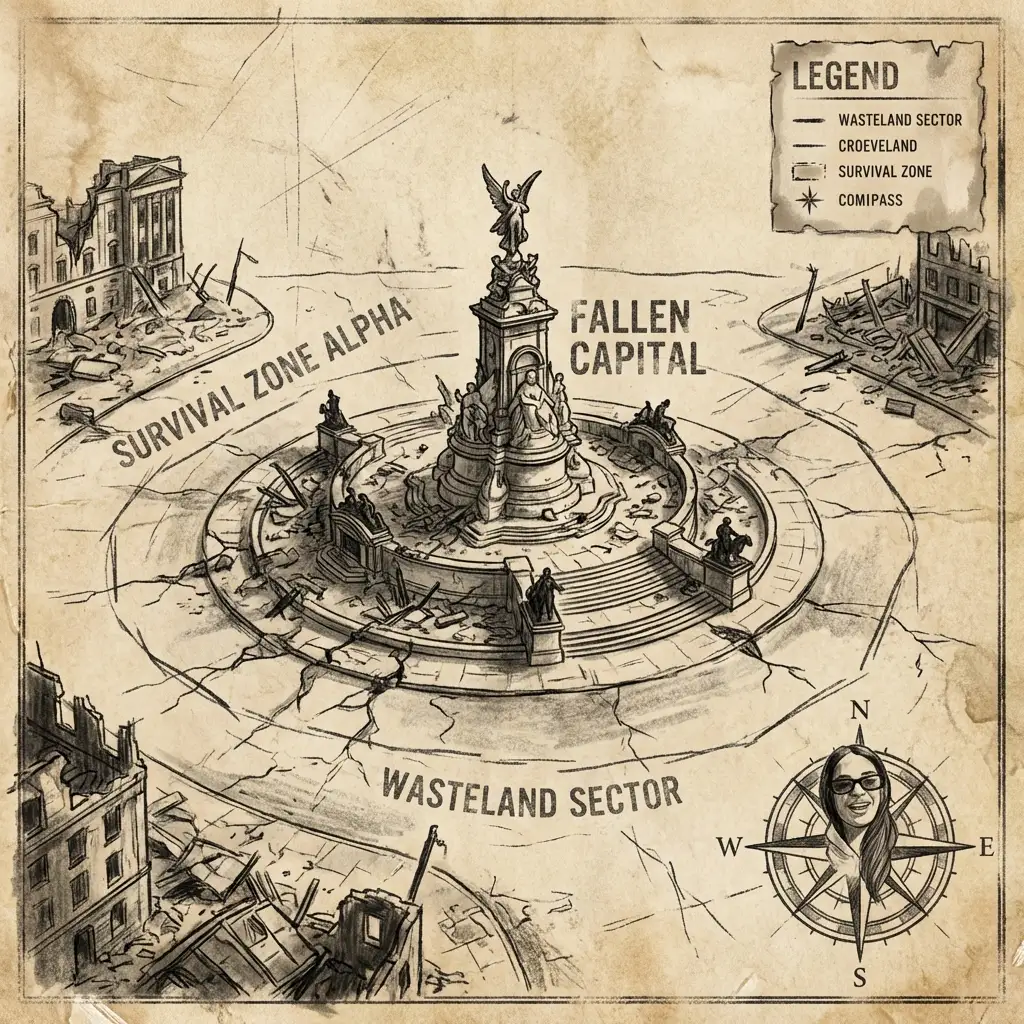
Post-apocalyptic map in a grunge style, showing ruined cities, wastelands, and survival zones.
About this style
Post-apocalyptic map aesthetics combine cartographic design with dystopian world-building, creating visual narratives of civilization's collapse through weathered, distressed imagery. This style emerged from Cold War-era anxieties and gained popularity through video games like Fallout, The Last of Us, and Mad Max, where survivors navigate dangerous territories marked by radiation zones, abandoned settlements, and resource scarcity.
The grunge aesthetic emphasizes decay through torn edges, coffee stains, bloodstains, burn marks, and faded colors that suggest these maps have been handled by desperate travelers in harsh conditions. Users typically employ this style for tabletop RPG campaigns, creative writing projects, video game concept art, or speculative fiction world-building where they need to convey both geographic information and atmospheric storytelling simultaneously.
For optimal results, specify the type of apocalypse (nuclear, zombie, climate collapse, or pandemic) as this influences color palettes and symbolic markers, and include details about hand-drawn versus printed origins, the level of deterioration, and specific legend elements like radiation symbols, safe houses, or no-go zones.
Both Gemini Image Pro and OpenAI 4o handle this prompt style effectively, though Gemini excels at incorporating authentic cartographic elements and typography while maintaining the distressed aesthetic, whereas OpenAI 4o produces more cinematic and painterly interpretations with dramatic lighting effects. Consider requesting specific paper textures, annotation styles in desperate handwriting, and color schemes dominated by sepia tones, desaturated earth colors, or sickly greens and yellows to enhance the post-catastrophe atmosphere.