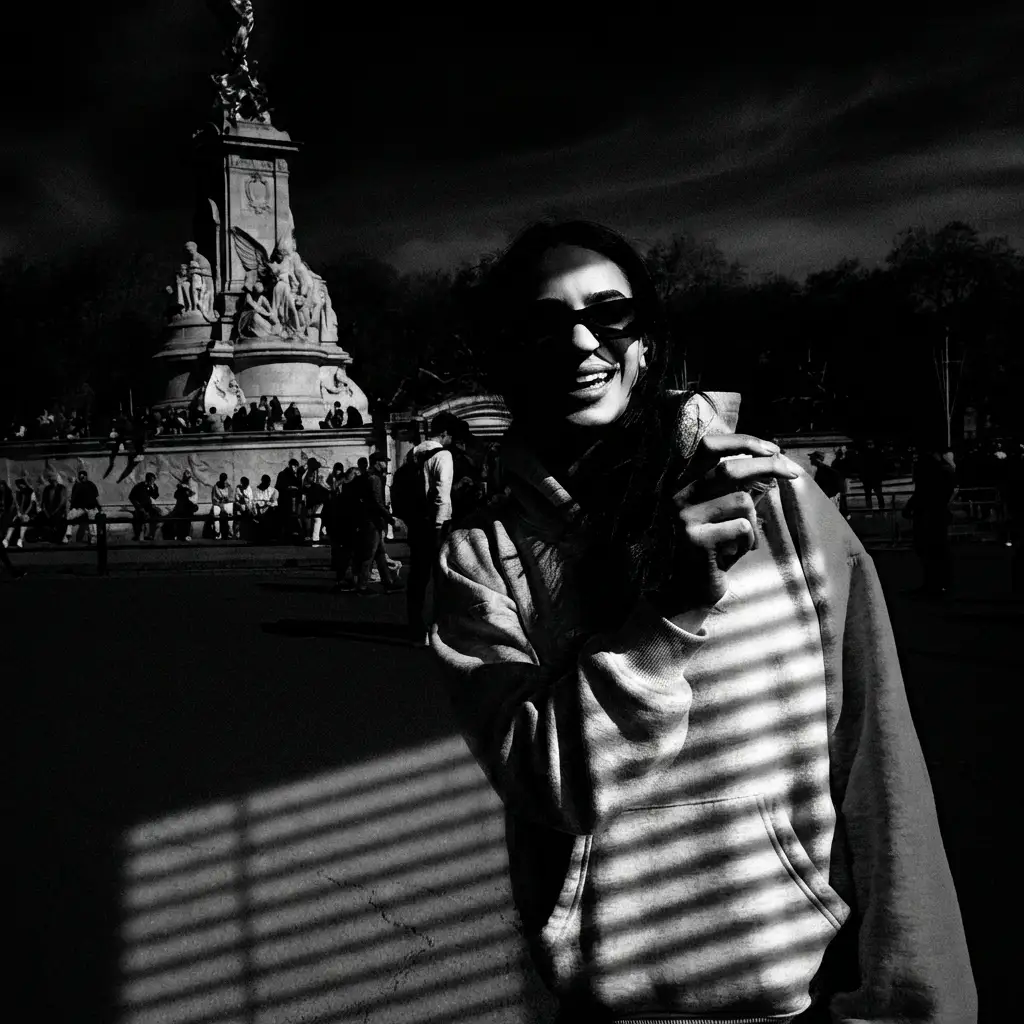
Film noir photography style, high contrast black and white, dramatic chiaroscuro lighting, deep shadows and harsh highlights, venetian blind light patterns, moody and mysterious atmosphere, 1940s detective cinema aesthetic
About this style
Film noir photography style captures the iconic visual language of 1940s and 1950s crime dramas, characterized by stark black and white imagery with dramatic contrasts between light and shadow. This aesthetic emerged from German Expressionist cinema and flourished in American detective films, creating a moody, mysterious atmosphere that conveys moral ambiguity and urban danger.
The style relies heavily on chiaroscuro lighting techniques, where deep shadows obscure portions of the frame while harsh highlights illuminate key elements, often incorporating signature venetian blind patterns that cast striped shadows across subjects. This approach works exceptionally well for portrait photography, urban scenes, detective or mystery-themed content, and any project requiring a vintage cinematic mood with psychological depth.
To achieve the best results with this style, emphasize descriptors like "high contrast," "dramatic shadows," and "1940s aesthetic" in your prompts, and consider specifying elements like fog, rain-slicked streets, or fedora-wearing subjects to enhance the noir atmosphere.
Both Gemini Image Pro and OpenAI 4o demonstrate strong capabilities with this style, as they have been trained on extensive film history datasets and understand the nuanced lighting requirements that define the genre. These models excel at rendering the subtle gradations between black and white while maintaining the crisp, high-contrast look essential to authentic film noir imagery. For optimal results, you may want to specify camera angles like low angles or dutch tilts, which were frequently used in classic noir cinematography to create visual tension and unease.