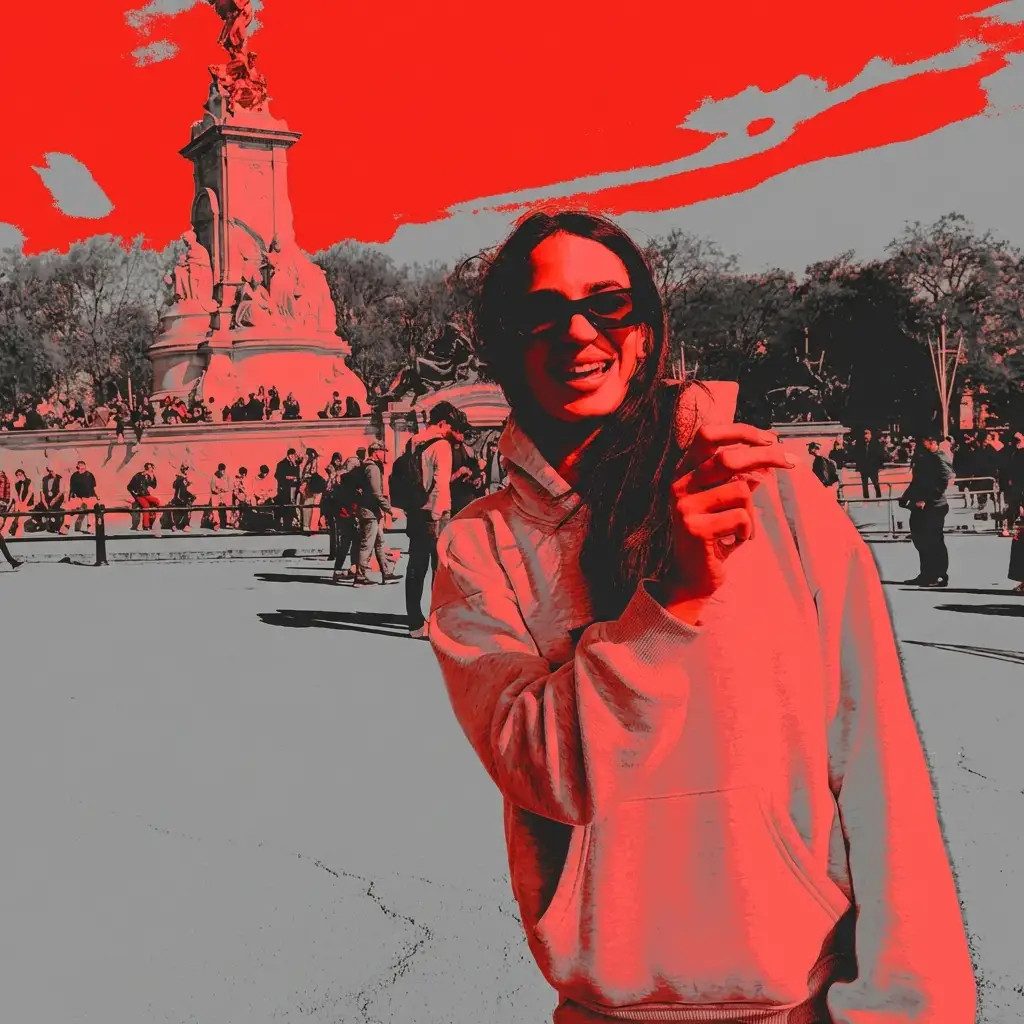
Duotone photography in red and grey tones, warm red highlights with neutral grey shadows, bold and dramatic two-tone color grading, striking contrast between warmth and neutrality, editorial poster aesthetic
About this style
Duotone red and grey photography is a bold graphic technique that reduces an image to just two contrasting tones, creating dramatic visual impact by mapping warm crimson highlights against cool neutral grey shadows. This style emerged from traditional darkroom printing limitations and gained prominence in twentieth century poster design, punk rock album covers, and modern editorial layouts where designers needed maximum impact with minimal color palettes.
The aesthetic works exceptionally well for portraits, urban architecture, and any subject where you want to emphasize form and contrast over realistic color representation, making it popular for magazine covers, music promotion, and contemporary brand imagery that demands attention.
To achieve the best results with this style, choose subjects with strong tonal separation and clear highlights and shadows, as the duotone treatment will amplify existing contrast rather than create it from flat lighting. The red tones typically occupy the brighter areas and midtones while grey anchors the shadows, creating a sophisticated interplay between emotional warmth and understated cool neutrality.
This effect works particularly well when combined with directional lighting, dramatic angles, and compositionally bold subjects like close-up portraits or geometric architectural forms.
Both Gemini Image Pro and OpenAI 4o handle this aesthetic effectively, with Gemini excelling at maintaining clean tonal separation and OpenAI 4o producing particularly nuanced gradient transitions between the red and grey zones. When crafting your prompt, explicitly mention the color mapping direction such as warm red highlights with neutral grey shadows to guide the model toward the intended dramatic effect rather than a reversed or muddled color application.